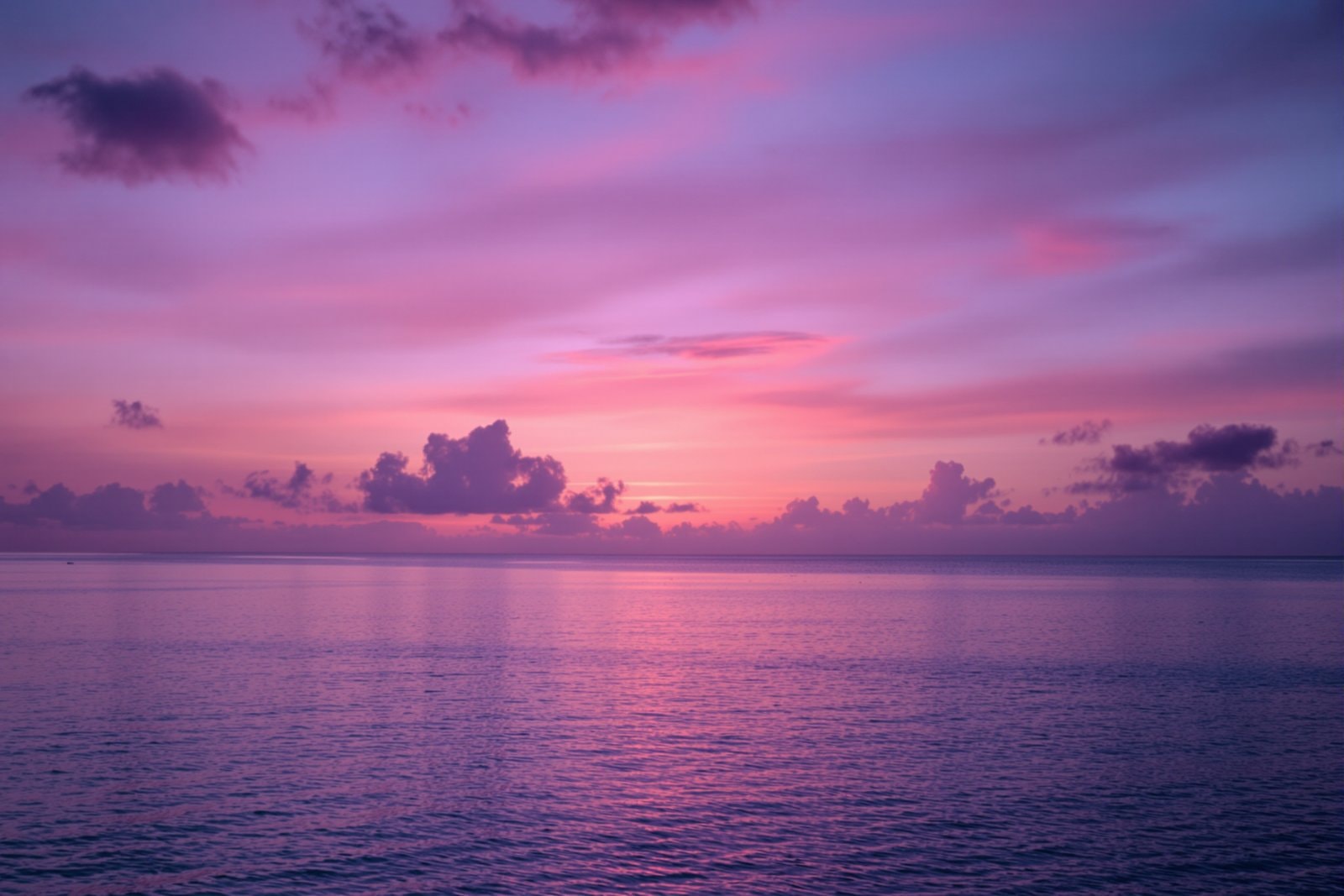
Antigua, at the end of the day
Couples on an Antiguan beach kept asking Paris Permenter and John Bigley to take their picture. The two travel writers had come down to the water with a different picture in mind. For years they had heard of a last, momentary edge of green as the sun disappeared into the sea. Island lore held that the couple who saw it together would enjoy true love. They were prepared to give the story another evening.
In their account, the wait on Antigua came after a succession of beautifully unsuccessful sunsets. Above Charlotte Amalie on St. Thomas, the city lights came on while a band of cloud hid the crucial bit of horizon. In Negril, Jamaica, the divers at the cliffs drew cheers until the crowd turned west. Cloud arrived there too.
The moon over the Pitons
On Saint Lucia their room opened toward the Pitons. Hummingbirds moved through the leaves and bananaquits came to the rail. The great twin peaks made such a good view that the sunset had serious competition. Again the horizon clouded over. Later a full moon came up over the mountains. A couple could build a whole evening around that consolation prize.
On Antigua the horizon stayed clear. The two writers described a quick, lime-green instant at the rim of the water. After taking other couples’ pictures that evening, they pulled out their own camera. This time they wanted a picture of the two of them on the beach.
What makes the light green?
Near the horizon, sunlight travels a long way through the atmosphere. Air bends light, and different colors bend by slightly different amounts. Layers of air at different temperatures can magnify a narrow colored edge. When the conditions line up, a fleeting green rim can appear as the last part of the solar disk disappears. There is no green light coming out of the sea.
It can happen at sunrise too, and a sea horizon is only one possible setting. The European Southern Observatory photographed a green edge at sunrise over the mountains of Chile, explaining the color as the result of “the refraction of the atmosphere.” The observatory’s sunrise photograph.
Find a place for the evening
Choose an open view with a clear horizon and let the evening be the outing. A cloud bank, haze or a headland can hide the last instant even on a beautiful day. Enjoy the sky and reflections without staring at the solar disk. Never look at the bright sun through binoculars, a camera viewfinder or a telescope without proper solar equipment. The observatory photograph is a good way to see the detail safely. NASA’s solar viewing guidance.
If nothing flashes, take the photograph of the two of you anyway. An island chosen for its harbor, hills or beach has plenty to offer after the light has gone.